
The concept of “low density” in a high-rise project might seem contradictory at first. How can a G+32 tower with hundreds of units be low density? The answer lies in how the project uses its land and how many units it places per floor. For buyers evaluating the L&T Thanisandra 4 BHK townhouse and other configurations, understanding this distinction is important.
What is Low-Density High-Rise?
Low-density high-rise refers to projects that balance tower height with generous spacing between towers and fewer units per floor. Instead of cramming 8 to 12 apartments per floor (common in many Bangalore projects), low-density designs limit units to 3 to 6 per floor. This results in better ventilation and natural light for each apartment, more privacy with fewer neighbours sharing your floor, reduced pressure on elevators, corridors, and common facilities, and a quieter living environment despite the building’s height.L&T Thanisandra, spread across 12 acres with only 8 towers, achieves this balance. The generous land parcel allows for wider spacing between towers and more open green space at the ground level.
The Space Equation
In a typical high-density project, the majority of the land is occupied by tower footprints, parking, and access roads, leaving minimal open space. In a low-density project on a 12-acre campus, the tower footprints occupy a smaller percentage of the total land, freeing up significant area for landscaping, amenities, and open spaces.For residents of the L&T Thanisandra 4 BHK townhouse and apartment configurations, this translates into views that are not blocked by adjacent towers, a campus that feels spacious and green rather than congested, and better airflow and natural light in every unit.
The 4 BHK and 5 BHK Advantage
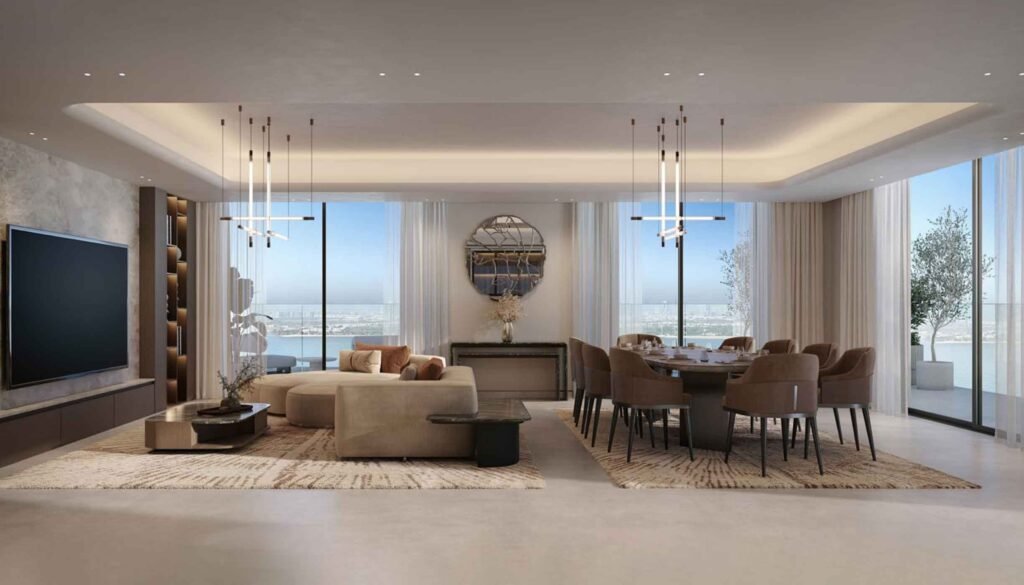
Larger configurations like 4 BHK and 5 BHK units benefit the most from low-density design. These units are typically occupied by families who value space, privacy, and a premium living experience. In a low-density tower, the 4 BHK buyer is not sharing their floor with seven or eight other families. The result is a more exclusive, less crowded residential experience.The 4 BHK townhouse format, which combines apartment convenience with townhouse-style living, is particularly suited to the low-density model. It offers multi-level living within a high-rise structure, providing a distinctive lifestyle.
Long-Term Value
Low-density projects tend to hold their value better over time. The spacious environment, better maintenance (fewer units sharing facilities), and premium living experience command higher resale prices and rental rates. For investors, this is a practical consideration that affects long-term returns.
The Chokkanahalli Lake Factor
L&T Thanisandra’s low-density design is enhanced by its lake-facing positioning. With 8 towers across 12 acres beside Chokkanahalli Lake, the project offers a rare combination of space, views, and nature that dense developments simply cannot match. This is a defining characteristic of the project and a key driver of its long-term appeal.
FAQs
Q: What is the L&T Thanisandra 4 BHK townhouse?
A: It is a larger configuration offered in the L&T Thanisandra project, combining spacious multi-level living with high-rise convenience on a 12-acre campus.
Q: What does low-density high-rise mean?
A: It refers to projects that limit units per floor and maintain generous spacing between towers, resulting in more privacy, better light, and a spacious campus.
Q: How many towers does L&T Thanisandra have?
A: The project has 8 towers with G+32 floors across a 12-acre campus, achieving a low-density design.
Q: Does low-density design affect property value?
A: Yes, low-density projects typically command higher resale and rental values due to the premium living experience they offer.